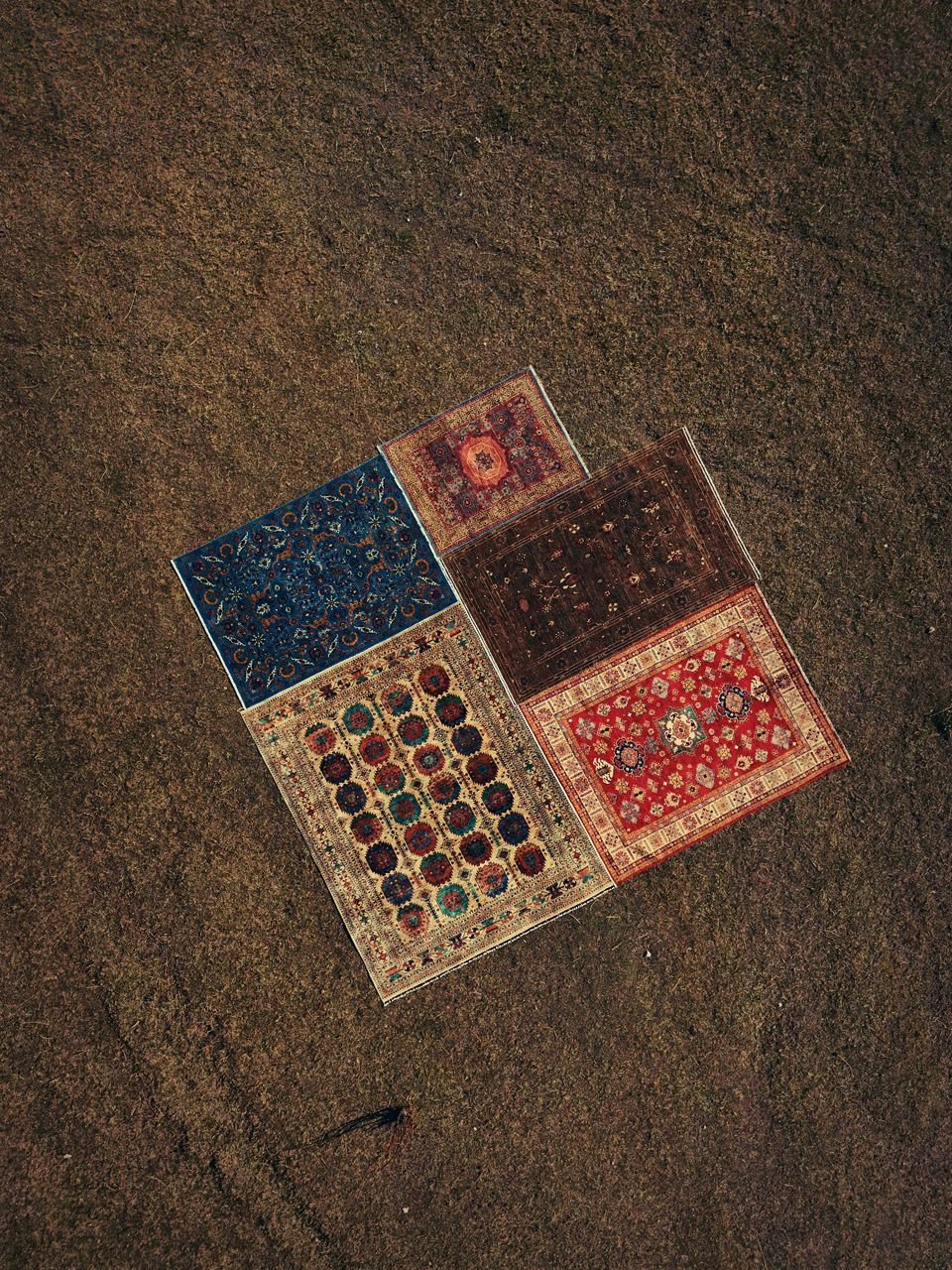
Design Categories
A Tradition Perfected Over Generations
Enduring Designs
Mamluk
Mamluk
The StoryÂ
A renaissance of geometric grandeur. While the roots of this design date back to the 15th century courts of Cairo, it was the master weavers of Northern Afghanistan who breathed new life into the style. By combining ancient Egyptian mathematical symmetry with the rugged durability of Afghan Ghazni wool, they created a design that is both a historical tribute and a modern masterpiece.
The LookÂ
Intricate, kaleidoscopic, and highly symmetrical. It is defined by a dominant central star motif that radiates outward into smaller octagons and rosettes.
Best ForÂ
Anchoring a formal dining room or a grand entryway. Its mathematical precision creates a sense of order and sophisticated luxury in large, open spaces.
Khal Mohammadi
Khal Mohammadi
The StoryÂ
Unique because it isn’t named after a city or tribe, but after a master dyer. Khal Mohammad developed a legendary “layered red” dye that became a gold standard for Afghan weaving. These rugs are famously robust, often woven by Turkmen artisans in Northern Afghanistan, representing a perfect marriage of technical durability and artistic color mastery.
The LookÂ
Characterized by deep, glowing reds and warm copper tones. The patterns usually feature symmetrical rows of stylized flowers or geometric “Guls” (medallions).
Best ForÂ
High-traffic areas like studies, libraries, or dining rooms. They are incredibly durable and pair beautifully with dark wood and leather furniture.
Herati Mahi
Herati Mahi
The StoryÂ
The Herati design is a masterpiece of ancient symbolism, tracing its roots directly back to the city of Herat. It is famously known as the Mahi (Persian for “fish”) pattern due to a beautiful legend: it is said to represent small fish swimming in a moonlit pond. This design reached its peak of sophistication during the Timurid era and has since become one of the most prestigious repeating patterns in the world, serving as the namesake of the Heratia legacy.
The LookÂ
Rhythmic, dense, and mesmerizing. The pattern consists of a central flower framed by a diamond, with four curved, serrated leaves parallel to each side. These leaves—the “Mahi”—give the rug a sense of constant movement and architectural harmony.
Best ForÂ
Sophisticated home offices, formal libraries, or under dining sets. Because the pattern is so detailed and repetitive, it is incredibly forgiving in high-traffic areas while maintaining a refined, high-end aesthetic.
Ziegler/Chobi
Ziegler/Chobi
The StoryÂ
The art of understated luxury. Born from a 19th century vision to blend Persian floral elegance with a softer, more muted palette, the Ziegler style is the pinnacle of “timeless” design. Crafted using hand spun Ghazni wool and earth toned vegetable dyes (Chobi literally translates to “wood like”), these rugs undergo a specialized sun aging process to achieve a soft, weathered patina that usually takes decades to form.
The LookÂ
Sophisticated, airy, and gentle. They are defined by large scale, open floral sprays and vine scrolls, intentionally omitting a central medallion to allow the furniture and the room’s architecture to breathe.
Best ForÂ
Bedrooms, transitional living spaces, and interiors where the goal is harmony and texture. It provides an elegant, high end foundation that complements rather than competes with your decor.
Kazak CaucasianÂ
Kazak CaucasianÂ
The Story A legacy of nomadic strength. Originally rooted in the high altitude tribal regions of the Caucasus, the Kazak design was perfected by Afghan artisans who specialized in recreating these ancient, high contrast motifs. These rugs are celebrated for their legendary durability and their unique finishing process—often stone washed to achieve a luminous, antique like patina that softens the bold geometry.
The Look Strikingly geometric and high contrast. These pieces utilize powerful symbolic motifs—stars, diamonds, and the “running water” border—rendered in vibrant vegetable dyes that exhibit rich abrash (natural color variations).
Best For Modern, minimalist, or eclectic spaces. Their strong, grounded lines and saturated colors provide a perfect visual anchor for rooms with high ceilings or contemporary furniture.
Khorjin/Caravan
Khorjin/Caravan
The Story
These rugs are the soul of Afghan weaving. Unlike the “City” rugs woven from paper patterns, Tribal rugs are often woven from memory. They reflect the movement of nomadic groups across the Afghan steppes, incorporating symbols of protection, fertility, and nature. Each piece acts as a woven record of a tribe’s journey and heritage.
The Look
Earthy, organic, and narrative. You’ll find stylized animals (camels, horses, birds), “S” motifs for protection against the “evil eye,” and rugged geometric panels. The colors are deeply tied to the land—rust reds, charcoal, indigo, and unbleached ivory.
Best For
Rooms that need a “soul.” They are the perfect statement piece for a minimalist modern home or a rustic lodge. Because they are so rich in detail, they serve as a great conversation starter.
Turkmen/Mauri (Bokhara)
The Story A symbol of status and tradition, the Bokhara design is one of the most recognized rug patterns in the world, representing the heritage of the Tekke and Turkmen tribes. These rugs were historically a staple of the Silk Road trade, prized for their disciplined beauty and the incredible skill required to maintain such perfect symmetry by hand.
The Look Disciplined, repetitive, and iconic.
Key Features Famous for the “Elephant Foot” Gul—a repeating octagonal motif arranged in strict rows and columns. They usually feature a very fine knot count and a silky, velvet-like wool pile.
Best For Traditional hallways (as runners) or bedrooms where a sense of order and classic elegance is needed.
Baluchi
Baluchi
The Story Woven by the wandering Baluch tribes across the borderlands of Afghanistan, these rugs are the true “soul” of nomadic art. Because the weavers traveled constantly, their looms had to be portable and small, resulting in pieces that are deeply personal and manageable in size. Unlike city rugs, Baluchi patterns are often improvised—representing a woven diary of the weaver’s environment, from the silhouette of a desert tree to the architectural arch of a prayer niche.
The Look Moody, authentic, and “perfectly imperfect.” They utilize a dark, sophisticated palette of deep burgundy, charcoal, and midnight indigo.
The Feel Uniquely “floppy” and soft. Because they were meant to be folded and carried on horseback, they feature wool foundations rather than stiff cotton, giving them an organic, blanket-like drape.
Best For Creating a “boho-chic” or cozy atmosphere. They are the perfect weight for wall hangings, bedside accents, or layering over neutral jute rugs.
Kilim (Flatweave)
Kilim (Flatweave)
The Story:Â
Kilims represent the lighter, more versatile side of traditional weaving. Unlike piled rugs, they are created using a flatweave slit-weave technique, resulting in a reversible textile with a refined, lightweight feel. Historically used as floor coverings, blankets, and nomadic partitions, Kilims became valued for both their practicality and their enduring geometric artistry.
The Look:
Bold, graphic, and architectural. Without a raised pile, attention shifts entirely to the interplay of color and pattern, from sharp triangles and zigzags to rhythmic geometric motifs traditionally woven using natural vegetable dyes.
Best For:Â
Ideal beneath dining tables, in kitchens, entryways, or layered within contemporary interiors. Their lightweight construction and reversible nature make Kilims especially versatile for high-traffic spaces and seasonal styling.